VOLA: Craftsmanship, Heritage and the Future of Danish Design
As a long-standing sponsor and supporter of The Mindcraft Project, VOLA remains closely connected to the evolving Danish design scene. We asked VOLA’s long-serving Sales and Marketing Director, Birthe Tofting, about Denmark’s design heritage, the company’s international perspective, and the future direction of Danish design.
VOLA represents a distinctive chapter in Danish design history. The first VOLA taps were created in 1968 by the renowned architect Arne Jacobsen for the National Bank of Denmark in Copenhagen. Just one year later, VOLA received the prestigious Danish ID Prize, marking the beginning of a long series of international design awards.
One of the earliest designs, the VOLA KV1 tap, was added to the permanent collection of MoMA in New York in 1974. A testament to its enduring design relevance. To this day, every VOLA tap is manufactured in Denmark at the company’s factory in Horsens, underscoring a continued commitment to craftsmanship and local production.

The Mindcraft Projet: How does the Danish design tradition and heritage influence VOLA today?
Birthe Tofting: “The first VOLA taps were designed by Arne Jacobsen for the National Bank in 1968. VOLA and Arne Jacobsen created the modern tap design and became part of the Golden Age of Danish design inspired by the Bauhaus movement but with a human-focussed approach.“

“I am part of the design community around Danish Design Center and Danish Alliance for Circular Industrial Design. In the design communities we are redefining which values Danish Design should represent today and in the future:
Design must possess a timeless aesthetic that makes us want to keep the product for years, perhaps even generations. When a product stays with us over time – when it is handed down and acquires a personal history – it becomes emotionally significant and deeply valuable. Surrounding ourselves with objects we love and identify with on a values-based level gives rise to a sense of calm, harmony, and meaning in our spaces.
A product should be intuitive to use, enabling us to master everyday situations without frustration. Its materials should age beautifully, acquiring a patina that tells a story.
It should also be repairable, with spare parts available from the manufacturer. The very act of maintaining and repairing our belongings can instil a sense of groundedness and competence in an increasingly complex and fragmented world. If we cannot repair the product ourselves, a professional or the factory should be able to – supported by a simple and accessible logistical system. The product should also be updatable, so it continues to meet the needs of its time. We must know where and how the product was made, ensuring that it was produced responsibly.”

Which values rooted in the Danish design tradition do you consider especially important to VOLA?
“These are exactly the values that have been important to VOLA from the very beginning. To meet all these expectations, the manufacturer must take a long-term perspective – assuming responsibility for the product far into the future. This requires a culture and organization built on lasting relationships: with employees, designers, retailers, and skilled professionals who understand the company’s holistic and enduring vision.
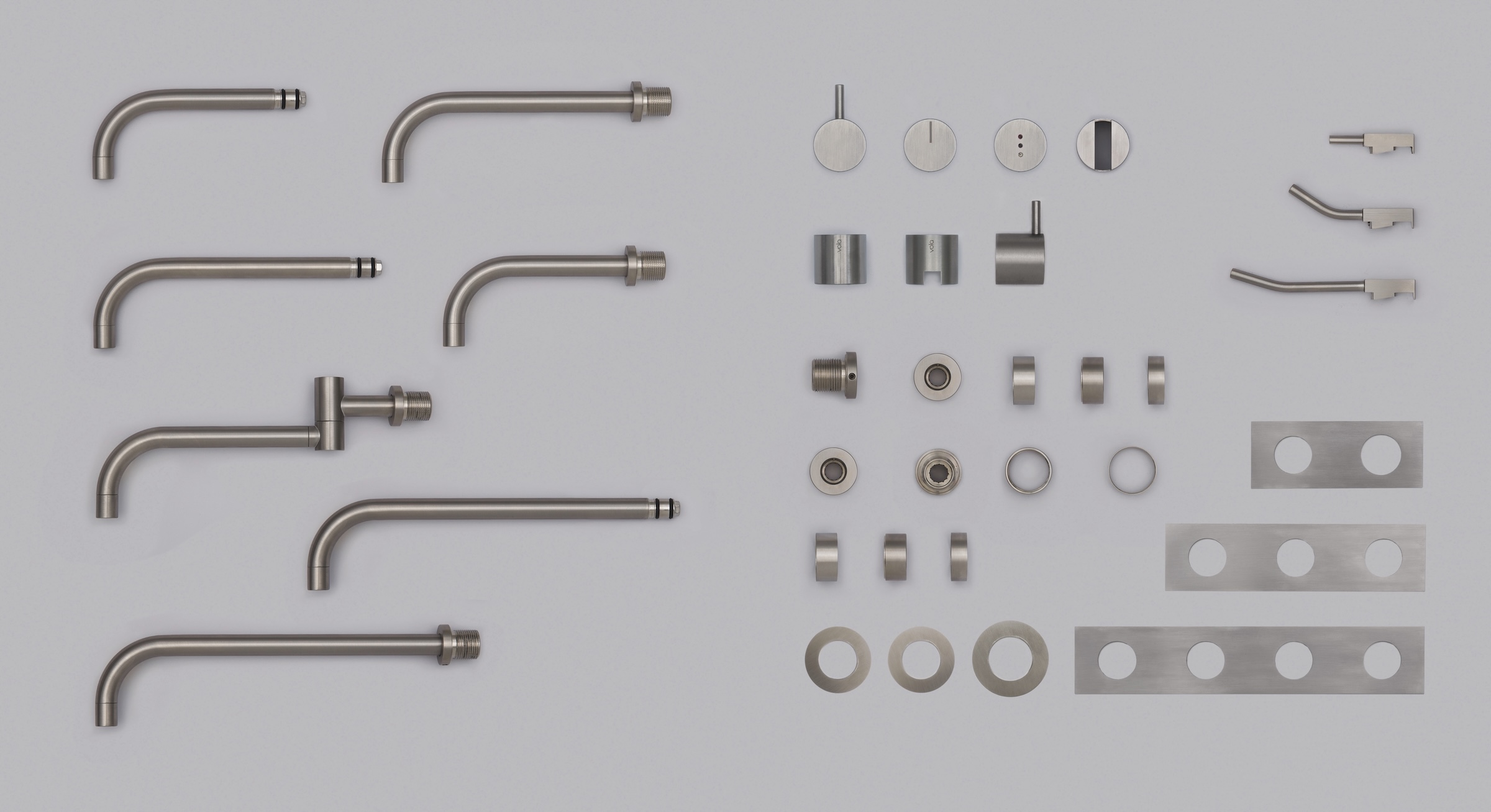
The VOLA series was conceived as a modular system and is continually refined. VOLA taps, sold worldwide, are all manufactured at the factory in Horsens, Denmark, which also houses the VOLA Academy, where installers are trained in assembly and repairs. While the underlying technology evolves, older models can always be upgraded to the latest technical standards. Products are crafted from solid brass and stainless steel, ensuring durability. VOLA supplies spare parts for its taps, including those from 1968. The factory also offers a refurbishment service, allowing customers to send in their older taps for restoration, ensuring they can last for many more years.”

What does the legacy of Danish design represent for VOLA in an international context?
“I am Director of our international subsidiaries in Germany, Austria, Switzerland, Sweden, UK, Belgium, Netherlands, Australia and Korea and I am meeting architects and interior designers from all over the world. They are all very interested in the legacy of Danish design and our ability to create liveable houses and cities. Longevity is a theme that is related to design of products and building, but also to our lifestyle where maintenance, repair, renovation and transformation are relevant in all dialogues with the architectural and design community. Here Denmark is at the forefront with a holistic thinking combining philosophy, design and a human-centred approach. I have started a blog called Danish Design 2.0 where opinion leaders within design, architecture, art, culture and business are interviewed about their perspective on longevity and design. Some months ago, we arranged a conference in Seoul where local architects have done their own research about Danish Design and VOLA and made an exhibition from their perspective. It was interesting to see how the Danish values made sense to them in a totally different culture.”

What does it mean for a Danish design company like VOLA to help nurture the next generation of Danish designers through The Mindcraft Project?
“For VOLA, design is at the centre of everything that we are doing. We are in a constant dialogue with the design community. We hope that Denmark can keep its position as a design nation. We can only do that if we are curious and willing to create products and services that there is a genuine need for but also possess a timeless aesthetics that make us keep them for a long time.”